HunchVue: AI-Assisted Technical Interviewing Platform
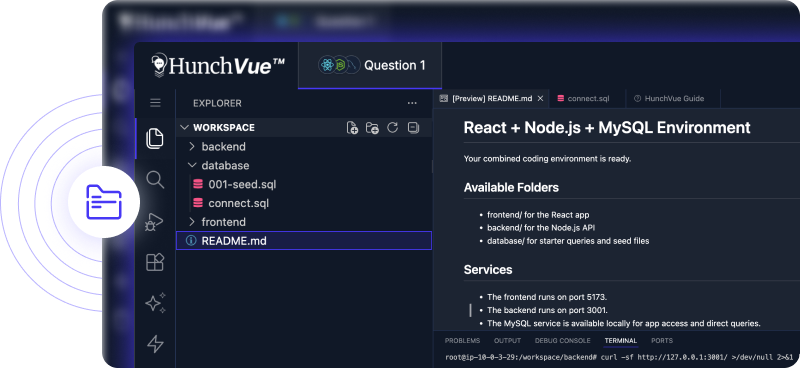
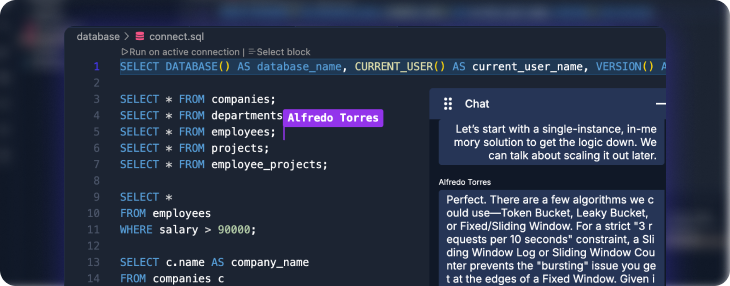
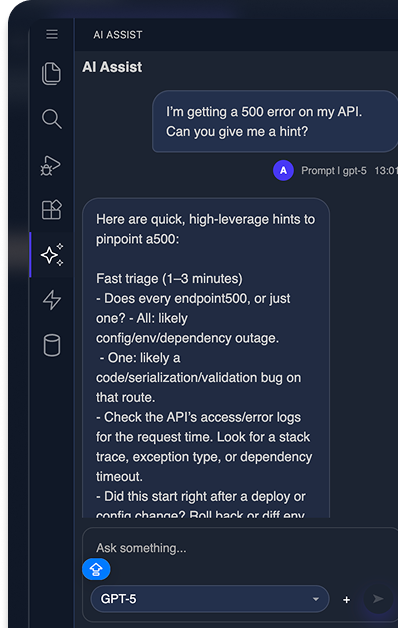
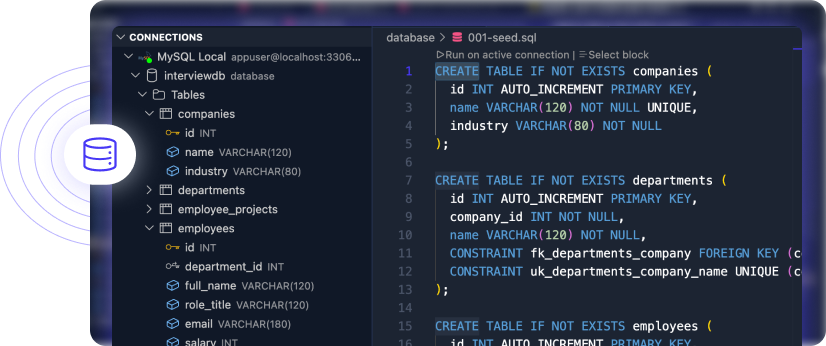
HunchVue is HireHunch's AI-assisted technical interviewing platform, built for how engineers actually work today — with multi-file project environments, live collaboration, database tooling, and AI copilots inside the interview itself, instead of the toy single-file editors most interview tools still ship. I owned end-to-end product design across the platform: multi-file project environments, real-time live collaboration, integrated AI assist, database and SQL tooling, and interviewer proctoring controls.
Engineers use AI tools on the job every day, but technical interviews hadn't caught up — platforms either blocked AI use outright, testing candidates on a skill they'd never actually use un…
The approachThe proctoring system didn't start as a granular log — the earlier shape was closer to a single "flag suspicious activity" signal.
The outcomeHunchVue has onboarded 20+ clients since launch, validating that the core design — realistic multi-file environments with transparent AI use and interviewer trust controls — holds up across…
The Challenge
Engineers use AI tools on the job every day, but technical interviews hadn't caught up — platforms either blocked AI use outright, testing candidates on a skill they'd never actually use unaided, or had no way to see it happening at all, leaving interviewers to guess whether a candidate got outside help, muted themselves, or switched tabs to another tool. Both options made the evaluation less trustworthy, right as AI-assisted engineering was becoming the norm. HunchVue needed to let candidates work the way they really would on the job, while giving interviewers hard evidence of exactly when and how they did it.
Research & Discovery
The feature set was driven by direct research rather than assumption: competitive analysis against existing technical interview tools to find where they broke down for real-world engineering work, close iteration with the developers building the platform to keep scope technically grounded, and client-facing demos that surfaced what interviewers actually needed to trust an AI-assisted evaluation. Each major feature was validated as a hypothesis before being committed to — proving out whether it changed interviewer or candidate behavior in the way we expected before investing further.
The Process
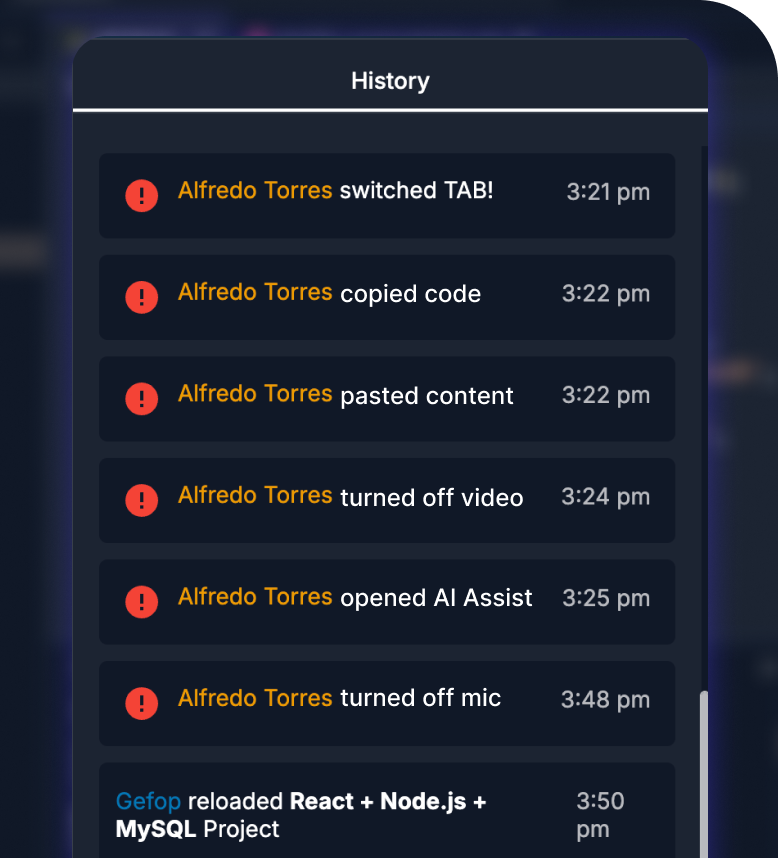
The proctoring system didn't start as a granular log — the earlier shape was closer to a single "flag suspicious activity" signal. That wasn't enough on its own: a flag with no context just makes an interviewer suspicious without giving them anything to act on. The design shifted to logging discrete, timestamped events instead — tab switches, copy/paste, video and mic toggles, even opening AI Assist — so an interviewer can scroll back and see exactly what happened, in order, rather than trusting a single vague alert.
The same logic shaped collaboration: rather than a raw shared screen, we landed on a "Follow Participant" model, letting an interviewer track a candidate's active file and cursor directly instead of just watching a static view.
The Solution
Five capabilities anchor the platform, each designed and validated independently:
Impact & Reflection
HunchVue has onboarded 20+ clients since launch, validating that the core design — realistic multi-file environments with transparent AI use and interviewer trust controls — holds up across real interview processes, not just internal testing.
The product is still early in go-to-market. The next phase of design work depends on real usage data, direct customer feedback, and how the interviewing landscape evolves — especially around AI-assisted coding, which is moving fast enough that today's design assumptions will need to be revisited.